

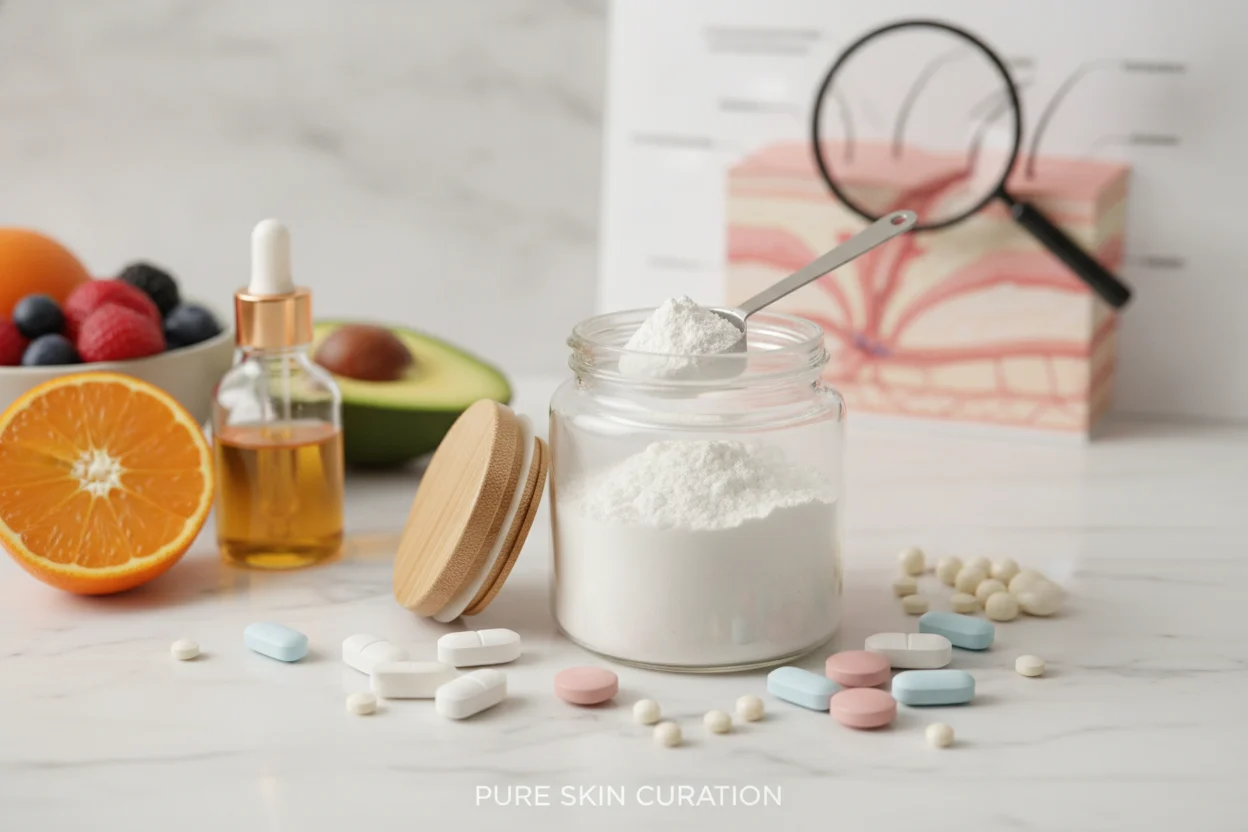
- What Is Collagen and Why Does Skin Need It
- How Collagen for Skin Supplements Actually Work
- Comparing Hydrolyzed Peptides and Marine Sources
- Key Ingredients That Support Collagen Synthesis
- Realistic Expectations and Potential Side Effects
- How to Select a Quality Beauty Supplement
- Choosing the Best Path for Your Skin
Are you searching for a reliable way to sustain a youthful glow as the years pass? Many consumers are turning to collagen for skin supplements to address structural changes in their skin from the inside out.
We monitor the shifting landscape of beauty wellness closely, and we know that discerning buyers want scientific facts rather than marketing hyperbole. In this detailed guide, we analyze how these products interact with your physiology and what you can realistically expect.
Disclosure: This article may contain affiliate links. If you buy through these links, we may earn a commission at no extra cost to you. This content is informational and does not replace professional medical advice.
What Is Collagen and Why Does Skin Need It
To understand how oral products work, we must first look at the biology of the dermis. Within the extracellular matrix, specialized cells called fibroblasts produce structural proteins that maintain tissue firmness. Endogenous collagen provides the essential scaffolding that prevents sagging, while elastin allows the tissue to snap back into place. However, natural synthesis begins to decline in our mid-twenties, leading to a gradual loss of structural density.
When analyzing how a collagen for skin supplements option fits into this biological cycle, it is vital to distinguish between the structural proteins your body makes and those you ingest. The physiological difference lies in how the body processes these molecules.
“While endogenous collagen is a complex, large-scale structural protein synthesized internally by fibroblasts, exogenous collagen supplements are pre-digested proteins designed to deliver specific amino acid building blocks to the metabolic pool.”
— Dr. Elena Rostova, Dermatological Research Specialist
Many factors, including UV exposure and oxidative stress, accelerate the breakdown of this dermal matrix. Introducing a high-quality collagen for skin supplements product to your daily routine may support the skin’s natural structure. It is important to remember that these products do not instantly replace lost fibers, but rather provide nutritional support. We observed in our editorial reviews that consistent, long-term use is key.
Our team emphasizes that while a collagen for skin supplements regimen is beneficial, it is not a direct cure for structural aging. Instead, it serves as a foundational tool. By supporting the dermal matrix, these dietary additions may improve the appearance of fine lines over time.
How Collagen for Skin Supplements Actually Work
The journey of an oral supplement begins in the gastrointestinal tract, where enzymes break down the ingested proteins. During this digestive process, large protein chains are cleaved into highly bioavailable bioactive peptides. These smaller units, rich in specific amino acids like proline, glycine, and hydroxyproline, are then absorbed through the intestinal wall into the bloodstream.
A common debate in dermatology is whether these absorbed peptides specifically target the dermis or are simply distributed where the body needs protein most. Some clinical studies published by the National Institutes of Health suggest that these peptides may signal fibroblasts to increase their own production of collagen and hyaluronic acid. However, the exact metabolic pathways remain a subject of ongoing research.
Using a daily collagen for skin supplements formulation may support overall collagen and skin elasticity, but individual metabolic rates influence the outcome. Your body prioritizes systemic needs, meaning structural benefits in the dermis might take longer to appear.
We always remind our readers that results may vary significantly based on genetics, diet, and lifestyle. A collagen for skin supplements product should be viewed as one component of a holistic approach to skin wellness. Because these peptides distribute throughout the body, they support overall connective tissues, not just facial skin.
Comparing Hydrolyzed Peptides and Marine Sources
When shopping for a collagen for skin supplements product, you will primarily encounter Type I and Type III options. Type I is the most abundant form in human skin, making it highly desirable for those seeking to support their dermal matrix. Type III is also vital, often found in younger skin and cardiovascular tissues.
To help you navigate the US market, we have compiled a structural comparison of the most common sources found in popular wellness brands.
| Collagen Source | Primary Types | Average Peptide Size | Key Characteristics & Suitability |
|---|---|---|---|
| Bovine | Type I & III | 2,000 – 5,000 Daltons | Excellent for general skin structural integrity and joint support. Cost-effective. |
| Marine | Type I | 1,000 – 3,000 Daltons | Highly bioavailable due to smaller peptide size. Ideal for targeted dermal support. |
| Vegan Alternatives | None (Plant-based) | N/A (Amino acids) | Uses genetically modified yeast or plant extracts to mimic the human amino acid profile. |
As shown in the table, marine sources often feature a lower molecular weight measured in Daltons. This smaller size may enhance absorption efficiency through the intestinal barrier. When evaluating a collagen for skin supplements powder or capsule, check the sourcing to ensure it aligns with your dietary preferences.
It is crucial to note that true vegan options do not contain actual animal collagen. Instead, they supply the specific amino acids required for synthesis. Choosing the right collagen for skin supplements source depends on your personal lifestyle, budget, and potential food sensitivities.
Key Ingredients That Support Collagen Synthesis
Formulators rarely package collagen alone; they frequently combine it with synergistic co-factors to maximize absorption and natural synthesis. Without these essential micronutrients, your body cannot efficiently organize amino acids into the triple-helix structure that defines strong dermal fibers.
Integrating these co-factors through a comprehensive skin-support supplement can optimize your results. Below are the key ingredients to look for on product labels:
- Vitamin C: This antioxidant acts as an essential co-factor for the lysyl hydroxylase enzyme, which stabilizes the molecular structure of collagen fibers.
- Hyaluronic Acid: Often included to boost hydration, this molecule binds water in the extracellular matrix, which may support a plump appearance.
- Copper: This trace mineral works alongside vitamin C to help cross-link collagen and elastin, aiding in overall collagen for skin firmness.
- Zinc: An essential mineral that plays an important role in cellular turnover and the repair of damaged dermal tissues.
While these added ingredients may improve the appearance of the skin, they do not guarantee immediate cosmetic changes. Each ingredient works systemically, meaning the overall impact on your complexion depends on your baseline nutritional status.
When reviewing a collagen for skin supplements option, look for formulas that disclose the exact dosages of these active co-factors. A well-rounded blend is often more effective than an isolated protein powder.
Looking for a collagen formula that discloses its full blend? One option that pairs collagen with supporting co-factors is Collagen Refresh, a skin-support supplement designed to be part of a healthy routine.
Realistic Expectations and Potential Side Effects
When starting a new collagen for skin supplements routine, patience is vital. Dermal remodeling is a slow physiological process. Most clinical observations suggest that it takes at least eight to twelve weeks of consistent daily intake to observe subtle changes in hydration or surface texture.
It is also important to maintain realistic expectations regarding what oral supplements can achieve. While they may support elasticity, they will not mimic the dramatic lifting effects of clinical dermatological procedures. Furthermore, these products are dietary supplements and are not designed to treat, cure, or prevent medical skin conditions like severe eczema, acne, or rosacea.
Some users may experience mild digestive side effects, such as bloating, a feeling of fullness, or a mild lingering aftertaste. If you choose a marine-derived collagen for skin supplements product, read the packaging carefully to avoid potential allergen exposure.
For those interested in exploring broader cellular health, you can read our Longevity Activator Review to see how other systemic formulations approach cellular aging. Always monitor how your digestive system responds during the first few weeks of use.
How to Select a Quality Beauty Supplement
Navigating the crowded US dietary supplement market requires a critical eye. Because the FDA does not approve dietary supplements for safety and effectiveness before they hit store shelves, the responsibility of verification falls on the consumer.
First, look for products that undergo voluntary third-party testing by independent organizations such as NSF International, USP, or ConsumerLab. These certifications verify that the product actually contains the ingredients listed on the label without harmful levels of heavy metals or contaminants. For more context on anti-aging ingredient profiles, see our Axavive Review.
Second, prioritize clean labels that are free from artificial sweeteners, excessive synthetic fillers, and unnecessary preservatives. Transparent sourcing, such as wild-caught marine sources or grass-fed bovine options, is another indicator of a reputable brand.
Ultimately, the best collagen for skin supplements choice is one that fits seamlessly into your lifestyle and budget. Because individual health profiles vary, we highly recommend consulting a qualified healthcare professional before starting any new dietary supplement routine.
Visit the official website for details →
Choosing the Best Path for Your Skin
Investing in your dermal health is a long-term commitment that yields the best results when combined with a balanced diet and proper sun protection. While using a premium collagen for skin supplements option may support your natural beauty goals, it works best alongside a healthy lifestyle. Explore our curated guides to discover the ideal formulations for your unique skincare journey.